Kayak & Picnic
Glide over picturesque Pontoosuc Lake in your own kayak as you witness the foliage reflections in the water. Scramble over to an island for lunch, or connect your kayaks and dine in the middle of the lake!
Includes kayak rental, life vest, and freshly packed picnic.
Picnic includes a tuna salad, turkey club, or
Roast beef wrap with horseradish.
Pickles & potato chips
Chocolate Brownie
Granny Smith Apple
Bottle of Spring Water
$39 per person
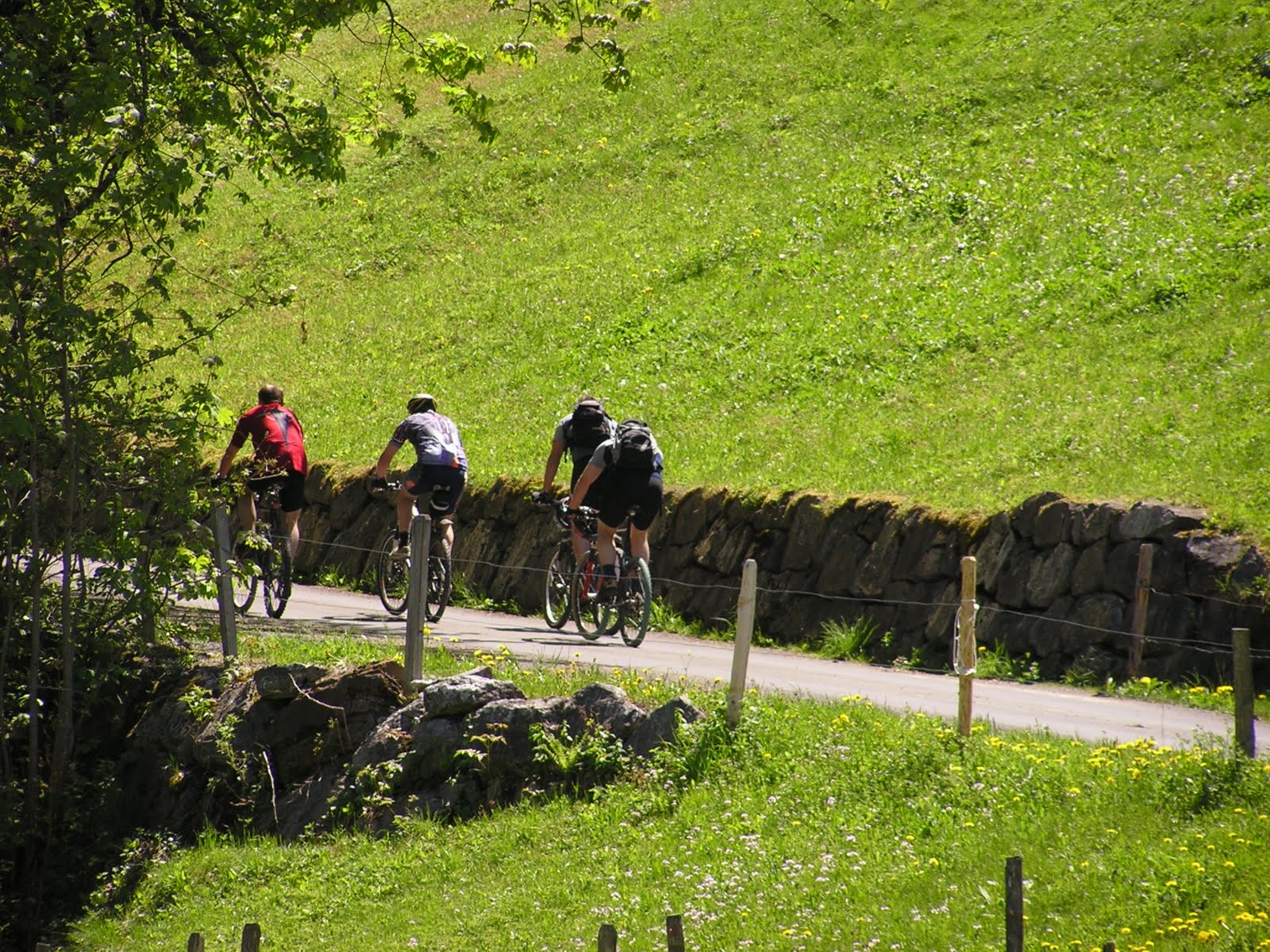
Bike & Picnic
Bike the beautiful Ashuwillticook Rail Trail along scenic Cheshire Lake.
.
Find a serene spot to enjoy your freshly packed picnic.
Includes a 3-hour bike rental, helmet, and picnic.
Picnic includes a tuna salad, turkey club, or
Roast beef wrap with horseradish.
Pickles & potato chips
Chocolate Brownie
Granny Smith Apple
Bottle of Spring Water
$39 per person
Wednesday, September 14, 2011
Thursday, September 8, 2011
Mount Greylock
At 3,491 feet, Mount Greylock is the highest point in Massachusetts. Rising above the surrounding Berkshire landscape, dramatic views of 60-90 miles distant may be seen. It became Massachusetts' first wilderness state park, acquired by the Commonwealth in 1898, to preserve its natural environment for public enjoyment. Wild and rugged yet intimate and accessible, Mount Greylock rewards the visitor exploring this special place of scenic and natural beauty.
The roads to the summit are open seasonally from late-May through November 1; weather permitting into fall, please call ahead for current road conditions. Following the two-year Historic Parkway Rehabilitation Project the newly restored road system offers numerous opportunities for scenic viewing along this state-designated Scenic Byway. Bascom Lodge and the Veterans War Memorial Tower are open seasonally. The Mount Greylock Campground (primitive overnight area) is accessible by hiking only.
The Massachusetts Veterans War Memorial Tower (shown at left, in winter) was built in 1932 and crowns the highest point in the state. The memorial was dedicated in June 1933 as a tribute to courage, endurance, loyalty and self-sacrifice, wherever these qualities have been shown, by the state’s men and women in the uniform of the state or nation.
Summer Use Trail Map http://www.mass.gov/dcr/parks/trails/mgry1.pdf
Winter Use Trail Map http://www.mass.gov/dcr/parks/trails/mgry2.pdf
For more specific trail maps http://www.mass.gov/dcr/parks/mtGreylock/brochures.htm
Information courtesy of http://www.mass.gov/dcr/parks/mtGreylock/
Friday, September 2, 2011
Local Events at Mass Moca, Hopkins Memorial Forest Trail and area points of interest
- I Love Vinyl Dance Party, Sunday, September 4, 2011
- Bureau for Open Culture: All Hands on Deck!, Friday, September 9, 2011
- Bureau for Open Culture: Bartleby's Pen - Gauthier & Sullivan, Friday, September 9, 2011
- Opening of The Speed Way, Saturday, September 24, 2011
- FreshGrass: A Festival of Art + Bluegrass, Sept 24 - Sept 25
For more information and details visit: http://www.massmoca.org/search_results.php?st=2&search=30
Hopkins Memorial Forest Trail and area points of interest
Only 4 miles from the 1896 House Inn
A quiet, easy hike through an old settlement area now managed as a research forest and a cross-country ski trail. The 2,500-acre Hopkins Memorial Forest lies in the extreme northwest corner of Massachusetts. Essentially a research forest belonging to Williams College’s Center for Environmental Studies (CES), its trails are well marked and open to the public.
On your way to or from Hiking on the Hopkins Forest Trail stop and check out some of the other local spots of interest, the Rosenburg Center, the Moon Barn, Buxton Garden and the Canopy Walkway. For more information about these attractions please visit http://web.williams.edu/ces/hopkins/researchacademics/resourcesfacilities.htm#buxtonpoint
For a trail map visit http://hmf.williams.edu/public/trail-map/
Labels:
Hopkins Memorial Forest Trail,
MASS Moca
Friday, August 19, 2011
Ashuwillticook Rail Trail
Ride or walk along this former railroad line now a scenic, paved 11.2 mile-long, passive recreation path with a gentle grade and smooth surface, as it passes along the Hoosic River, between Mount Greylock and the Hoosac Mountain Range. Access oprtins are at the Berkshire Mall entrance, Farnam;s Road or from downtown Adams at the Discover the Berkshires Visitors Center. Walking, biking, roller blading, picnicking, and car-top boating.
The southern end of the trail begins at the entrance to the Berkshire Mall off Route 8 in Lanesborough and travels 11 miles (18 km) north to the center of Adams. Parking lots and restrooms are available along the way.
The Ashuwillticook Rail Trail passes through the Hoosac River Valley, between Mount Greylock and the Hoosac Mountains. Cheshire Reservoir, the Hoosic River, and associated wetland communities flank much of the trail offering outstanding views and abundant wildlife. The word Ashuwillticook (ash-oo-will-ti-cook) is from the American Indian name for the south branch of the Hoosic River and literally means “at the in-between pleasant river,” or in common tongue, “the pleasant river in between the hills.” The name was adopted for the trail as a way to reconnect people to local history and the natural environment.
History of the rail corridor
Built during the industrial boom of the 1800s, the railway proved to be a vital commercial link from the Atlantic Seaboard to communities which would have otherwise been isolated in the Berkshire Hills.
In 1845, the Pittsfield and North Adams Railroad developed this corridor with the goal of extending the Housatonic Railroad north to Rutland, Vermont. While the track was under construction, the company was acquired by the Western Railroad, which later became part of the Boston and Albany Railroad (B&A), as their North Adams Branch. Mineral traffic developed on the line and a number of limestone operations went into business. The New York Central Railroad took over the B&A in 1900, and upgraded the line, which was sold to the Boston and Maine Corporation in 1981. As a connection to an existing track in North Adams, Boston and Maine ran the line with declining success until they abandoned rail service in 1990. Seeing the potential for recreational use of the corridor, citizens organized to preserve the right-of-way, eventually gaining the local and political support needed to make this rail trail a reality.
Information courtesy of http://www.mass.gov/dcr/parks/western/asrt.htm
Labels:
Ashuwillticook Rail Trail,
things to do
Friday, July 29, 2011
Williams College Museum of Art
(under 5 minutes from the 1896 House Inn)
The Museum has 14 different galleries to browse through, so a perfect afternoon trip or morning Jaunt just minutes away from the inn.
15 Lawrence Hall Dr, Ste 2 Williamstown, MA
Check out their blog at http://wcma.williams.edu/blog/
General Information: (413) 597-2429
Widely considered one of the finest college art museums in the country, the Williams College Museum of Art is a department of Williams College. WCMA houses nearly 13,000 works that span the history of art
An active, collecting museum, its strengths are in modern and contemporary art, photography, prints, and Indian painting. The museum is especially known for its stellar collection of American art from the late 18th century to the present.
Admission is free.
Tuesday through Saturday, 10 a.m. to 5 p.m.
Sunday, 1 to 5 p.m.
The museum is closed on Mondays
Exhibitions:
JUNE 11, 2011 - OCTOBER 2, 2011
Masters of the Modern: The Gift of Madeleine P. and Harvey R. Plonsker, Class of 1961
MAY 13, 2011 - SEPTEMBER 4, 2011
Artist’s Project: Jesse Aron Green
Jesse Aron Green, on campus for this academic year as the Arthur Levitt, Jr. ’52 Artist-in-Residence in Art, has been commissioned to create a work of art in response to the question: How does an artist respond to the space of the museum?
Check out the many more current and upcoming exhibitions at http://wcma.williams.edu/exhibitions/current/
Friday, July 1, 2011
Things to do in the area on July 4th weekend
Saturday, July 2th
RENDEZVOUS AT THE FOLLY
Williamstown, noon-2 p.m.
Field Farm, Sloan Road . The Trustees of Reservations invite you to explore the place where modern art and architecture meet nature in the pinwheel-shaped house by the beaver pond. Tours offered at noon and 1 p.m. on alternate Saturdays July 2, 16, 30 and ending Sept. 10. Admission is $5 per adult; children, Trustees members and Williamstown residents are admitted free. To learn more, visit www.thetrustees.org, call 413-298-3239, ext. 3003 weekdays
Saturday, July 2th and Sunday, July 3rd
ART STUDIO TOURS
Beaver Mill, 189 Beaver St. /Route 8. 413-664-9550. Free and open to the public. The tours will be guided by artist Robert Hagy, and will explore various artists’ studios and spaces within the Beaver Mill, including the studios and alternative galleries of Leibman Studios, Keith’s X-tremes Gallery, Rudd Sculpture Space, studio21south, Gravity Press, and others. Please note, that the galleries have general open hours and can be visited without a tour, but other studios and spaces can only be visited on the tours. Meet at the front (center) door at 1 and 2 p.m. Please note that there are stairs and the studios are not handicapped accessible.
Saturday, July 2th, Sunday, July 3rd and Monday July 4th
10TH ANNUAL BERKSHIRE ARTS FESTIVAL
Great Barrington , 10 a.m.-6 p.m.
Ski Butternut, Route 23. $11 for adults, $10 for seniors, $5 for students; free for children younger than 10. $13 for weekend pass. Seven artists and artisans from the Berkshires are among the more than 200 juried artists from 22 states and Canada who will be exhibiting their work. Festival includes workshops, demonstrations, performances, activities for children and food. The show will be held, rain or shine, under tents, outdoors, and in the air-conditioned lodge at Ski Butternut. Ample free parking is available. For more information visitberkshiresartsfestival.com or call 800-834-9437.
Sunday, July 3rd
THE 26TH ANNUAL BERKSHIRE CHARITY AUTO SHOW
26th Annual Berkshire Charity Auto Show on Sunday, July 3, 2011, To Benefit Berkshire United Way, on the grounds of the Hillcrest Campus of Berkshire Medical Center, 165 Tor Court, Pittsfield. (Rain date is July 10th.) Thirty-seven categories of cars will be represented ranging from antiques and originals by decade beginning with the 1900 Ford Model A up until 1972, with special groups for popular models like Corvettes and Thunderbirds. Show proceeds benefits Berkshire United Way , which supports the event with volunteers. A family-friendly event, admission if $4.00 for adults and free for children under 12 accompanied by a parent. Show car registration is $10 and includes admission for two adults. All registrants have the chance to cast their vote for the best entries in each category. Refreshments will be available and music provided by local DJ Paul Therrien.
Monday, July 4th
BASEBALL AND FIREWORKS (only 15 minutes from the 1896 House Inn)
Joe Wolfe Field, 310 State St. (Route 8). The SteepleCats take on the Mystic Schooners at 6:30, with fireworks put on by the City of North Adams following the game. T-shirts will be give to the first 500 fans. More information at www.steeplecats.com.
Saturday, February 12, 2011
Time to Make the Maple Syrup!
This is a re-post from last year. Enjoy!
City girl me had no clue about this stuff. I grew up thinking that the store bought corn syrup concoction called "Log Cabin" (how quaint) was "maple" syrup...well was I ever duped...and worse, many city folks were missing out on the good stuff!
Northwestern Massachusetts is rife with the perfect kind of maple syrup tree. Over 100,000 gallons of the stuff was produced in Massachusetts alone last year. Canada makes the most syrup in the world, (730,000 gallons) and 80% of our North American maple syrup.
The slide show and talk "SAP HAPPY!" was presented by the Leabs, who have family-run IOKA VALLEY FARMS since 1936. Ioka is located in Hancock, MA, which is just a hop, skip and jump down the road from our 1896 House. They do stuff year round for family fun and produce.
Come up and stay with us at the 1896 in February or March and go visit Ioka! It's only 15 minutes away, and close to Jiminy Peak Ski Resort, another worthwhile destination, so you can combine it with a ski trip!
The Native American Indians dis-covered maple syrup's sweet glory and taught the Euro settler/invaders how to make it.
It was used as a sweetner instead of cane sugar, which was expensive and rare for hundreds of years.
During wartime, when rationing was underway, many housewives substituted maple sugar for white sugar in their recipes to help the war effort. At only 40 calories per spoonful compared to 78 calories in white sugar, it is a healthier option.
The Euro Settlers took it up a notch with their boiling techniques and we now have modern day syrup and many by products.
There is no real difference between VT mountain syrup and flatland NY syrup, like you would think when you compare wine grapes, though slight differences in weather conditions, soil, and pollution can affect the flavor and sweetness strength in any state.
The biggest threat to maple trees (besides the road salt used on snowy streets), comes in the form of an insect known as the Asian LongHorned Beetle. This icky looking bug is about the size of a large cockroach, but moves slowly as it crawls up walls and trees. It burrows into the bark and lays it's eggs.
When they hatch, the larve eat the tree from the inside out. There is no natural predator for these bugs, so they can be a plague for maples. It will kill forests unless stopped. YIKES.
How did these beetles get here? Chinese imports shipped in wooden crates about 10 years ago arrived carrying beetle eggs inside the untreated wood slats. The eggs hatched and the beetles struck out into the nearest hardwood forests.
New pest control laws require wooden crates to be chemically treated to prevent this, but it's too late...and China is battling these creatures to save their wood just as we are.
The beetles have traveled from NY, L.A. and Chicago munching their way across New England, attacking mostly hardwoods and maples. They are in MA, but not yet spotted in the Berkshire area, or not reported yet if they are here.
If you see one of them, please call in their location (or e-mail) to the MA Dept of Agricultural Resources: 866-702-9938. They inspect a reported area and cut down the known affected trees, then burn the wood to prevent the spread of more bugs. It is really a horrible infestation and should be taken seriously by tourists and locals alike.
Though not prominent here, there are diseases and viruses, similar to the Dutch Elm Disease that took the beautiful Elm tree population from us less than 100 years ago. Some of these are Maple Wilt, Sap Streak and Tar Spot, as well as other fungi. Thank goodness trees have some defenses built in, but we need to monitor them. While some farmers spray their trees with pesticides, it can have a negative impact on the environment, so most do not. Maple syrup processing is almost totally organic with total respect for nature.
February is upon us, so somewhere after the 15th, when the weather decides to cooperate and make freezing nights and warmer days, the maple tree sap starts to flow...
Farmers and syrup enthusiasts run for the woods with their taps, their cordless drills and their buckets and hoses...Maple Sugaring Time is Here!
It only lasts about 6 weeks, then the angry trees change their sap to feed their budding leaves in April, making it cloudy and way too bitter for syrup. Sugar Time is over for the year, so maple syrup producers have gotta move fast! Sugaring does not harm the tree if done responsibly and correctly.
Ioka Valley Farms has a Sugar House (also known as a sugar shack) that is open to the public on weekends beginning February 13th, so you can watch the magic happen for yourselves.
Sample their delicious, pure home grown maple syrup in all the main grades...oh ya, did I mention there are different grades of syrup?
Let's start with how to make it...
First you wait for the right weather conditions to make sure the tree is starting the sap flowing. The sugar maple tree has the best sap, compared to other kinds of maples, because of it's concentration of sugar and excellent taste. A tree has to be at least 30-40 years old before you can tap into it for syrup. It will produce sap for 150 years.
Now drill a small hole about 1" deep and about 1/3" diameter. Place your hose tap or metal spigot into the hole and either hang a bucket on it, or run the hose from it to a master container.
You can put 2 taps into one tree, but you cannot use the same hole twice. The tree heals itself and that hole is dead for future tapping.
Consider that each tree tap only pulls out about 1 quart of sap per 6 week sugaring season, so it really takes a lot of trees to make enough to sell for profit.
Ioka Valley Farm has about 4000 trees tapped and is aiming for 5000 in the 2010 season coming up in a few weeks. Rob Leab has been making this syrup since his first batch in 1993 and has perfected a safe, healthy and earth friendly product that tastes out of this world good!
The sap is pumped by tubes into a large container. Now it's in the hands of the Sugarhouse (boiling room) operator to make it into syrup. A fairly new technology to many sugar houses is a machine that performs reverse osmosis, taking some of the water out of the sap prior to boiling it down. That helps reduce the time and energy it would take to make syrup...most modern sugar houses use oil burners, not wood fires.
The sap has to boil down to a syrup density of 67% sugar and reach a constant temperature of 219'. It should pour in sheets or "aprons" rather than individual drips. Experienced syrup makers know the look of the bubbles on the surface of the boiled sap.
It is important to pour it into sterile containers at this point.
It takes 40 gallons of sap to boil down to 1 gallon of syrup...wow! Takes a couple-three hours to finish a batch, then start another, and another and another until the season ends and you are exhausted.
The Maple Association has a "Wrap Party" at the end of season where all the weary syrup makers party hardy!
Sunlight breaks down the flavor, so while there are great "shaped" glass maple syrup containers, (great tourist gifts), it is best to buy serious syrup for your own use in containers that do not let light in.
While there is a guidebook that shows FDA standards and helpful co-syrup producers to spot errors in processing, there are no official inspections for maple syrup, so you have to trust who is making it.
The Massachusetts Maple Association can help you with locating syrup farms, syrup making techniques, as well as instructions how to store it and recipes.
Syrup is great, but there are other products you can make. Maple Taffy can be created at 233', Maple Cream is syrup cooked to 236' and Maple Peanuts & Popcorn Coating is best cooked to 250'.
Hard Maple Candy, while delicious, is risky and difficult. It tends to be costly because of the pain it is to make. You have to heat the syrup to 295' and it hardens in the trays...could stick to the pans or worse, catch fire, so requires serious monitoring. Maple sugar is even more work to process.
Maple syrup is highly flamable and many a sugarhouse has burnt to the ground after an unmonitored batch boiled over. You would not want to make it in the house kitchen because the steam that rises from syrup is very moist and thick. It peeled the wallpaper in Mr. Leab's house when he first tried it.
My personal favorite by-product is Maple Cotton Candy...amazing taste and texture...you gotta try it!
GRADING is based on when in the sugaring season the sap is gathered to use and how dark or light the color is of the syrup.

The quality is the same, only the color and flavor strength is different. The first sap that comes at the beginning of the season yields a light colored very delicately flavored syrup. Grade AA Fancy, this eventually begins to turn a medium then a darker amber color as the season changes the sap with weather.
As the tree begins to try to heal the tap wound, bacteria forms in the sap near the tap wound that will carmelize and color the syrup.
As the syrup gets darker, Grade B, the taste becomes a stronger maple flavor. Grade A syrup is best to make hard candy with, as well as pour on ice cream. Table syrup that you would put on pancakes is generally a Grade B darker syrup.
Grade C is the last of the season sap and is very very strong and dark, so is usually sold to "fake" syrup producers who add corn syrup and other additives to it to lesson it's heavy flavor.
Maple Syrup lasts forever. Like Honey, it heals itself and does not spoil. If stored in a cool, dark place, it will retain it's flavor and quality for years. If it crystalizes, just heat it up to clarify it and it returns to it's old self. Cool huh?
I cannot wait to stop over at IOKA VALLEY FARMS in a few weeks for a pancake breakfast with real maple syrup at their cleverly named CALF-A restaurant... and of course to watch them boil that sap!
Hey, in case you didn't know it, maple syrup is GOOD FOR YOU! I found the below info online...
What Are the Health Benefits of Grade B Maple Syrup?
Grade B maple syrup is the most viscous concentration of the syrup. It is harvested during the end of the sap season, and resembles molasses more than its counterpart Grade A maple syrup. The potency and richness of Grade B maple syrup amplifies its health benefits.
ENERGY
Compared to Grade A, Grade B maple syrup has elevated levels of sucrose, fructose and glucose. In addition to providing a source of energy, sugars aid pain management by reducing the body's sensitivity and enhancing natural relief.
CHOLESTRAL
Grade B maple syrup also has elevated levels of manganese, a mineral that has antioxidant properties. Manganese supports overall body function and can help lower high triglyceride and cholesterol levels.
HEART HEALTH
Grade B maple syrup also fortifies the body with zinc. Apart from functioning as an antioxidant, the essential mineral strengthens the heart by replenishing and preserving endothelial cells.
IMMUNE HEALTH
Manganese and zinc, the predominant minerals in Grade B maple syrup, support immune system function by contributing to cell growth and maintaining healthy levels of white blood cells.
MANLY HEALTH
The two principal minerals in Grade B maple syrup have also been observed to contribute to male reproductive health. Manganese is involved in the production of male sex hormones, and zinc can help reduce prostate size.
YAY!
Now here is a video on how to make maple syrup...
http://www.youtube.com/watch?v=YJmDW0OtWMk&feature=related
Enjoy!
xx
Kathy
Subscribe to:
Posts (Atom)